












Download Case Study
Share your contact details and we’ll send a download link to your inbox.
One or more fields are empty.
Not a valid Email address.
Please agree with our terms and privacy policy.

Days
Hrs
Min
Sec
Promo Code:HIGHSPEED


Share your contact details and we’ll send a download link to your inbox.

For mortgage loan officers, time and trust are everything. Let’s Plan was built with both in mind. Its flagship product, LP Loan Planner™, helps loan officers guide homebuyers through loan options clearly and confidently, turning 20 to 40-minute conversations into qualified leads.
The platform serves thousands of mortgage bankers and brokers, with the capacity to support up to two hundred thousand concurrent meetings. At that scale, reliability is non-negotiable. Any server outage does not just create a technical headache. It interrupts real client conversations at the worst possible moments.
For years, fixing server issues meant hours of emergency developer work, thousands of dollars in unplanned costs, and frustrated customers. That all changed when founder Steve Dellario discovered Cloudways Copilot. Read on to see how it changed how he manages his servers entirely.
Steve Dellario built Let’s Plan from the ground up, and keeping it running smoothly was always a top priority. But with a platform handling complex integrations between Laravel, PHP, and WordPress, problems were never simple. Even small external changes, like a Chrome update, could bring the whole system down.

– When the platform goes down, reports like this one cannot be generated. Every server outage directly interrupts real client meetings and real loan decisions. (Source: Let’s Plan)
Steve works with an independent development team from a company called Built Mighty. But even with a skilled team in place, server problems were a recurring source of stress.
“It was always a bit of a panic moment when the system went down.” — Steve Dellario
When something broke, the response required real effort. Two or three developers would have to drop everything and start digging. They would comb through code and logs, hunting for the source of the error. The process was risky. Steve explains that there were instances where trying to fix one problem would accidentally create another.
“Often, they were curing a symptom without fully knowing what the cure was.” — Steve Dellario
The time cost was high. On average, diagnosing and resolving a single issue took about half a day of developer time. “They are very skilled, so I highly recommend Built Mighty,” Steve says, “but the process was laborious, and you never knew exactly how long it would take.”
The financial toll added up quickly. Half a day of emergency work from two or three developers could easily run into several thousand dollars per incident.
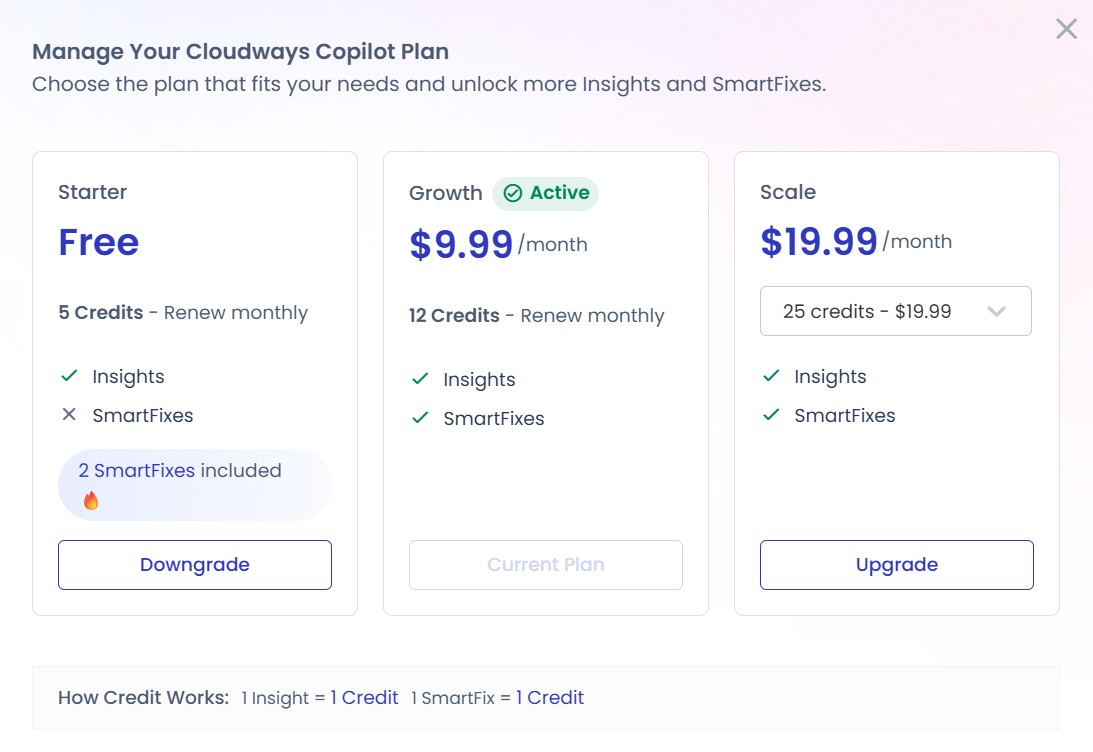
– Cloudways Copilot offers three flexible plans, Starter, Growth, and Scale, giving businesses of all sizes access to Insights and SmartFixes.
Beyond time and money, there was another hidden cost that Steve found equally painful: knowledge transfer. The development industry sees regular turnover. When a lead developer moved on, Steve had to invest heavily in bringing a new person up to speed. That meant re-educating someone on the platform’s systems, its most common problems, and the fastest ways to diagnose them.
“It was a significant investment in knowledge transfer.” — Steve Dellario
Every outage also triggered a secondary wave of disruption. When the system went down, Steve’s phone would start ringing. Customers wanted answers. His team scrambled to manage communication while the developers worked to find the fix. It was chaos on multiple fronts at once.
Steve did not set out to test Cloudways Copilot. There was no planned evaluation, no pilot program. The tool introduced itself by solving a crisis before Steve even fully understood what it was capable of.
It happened on a Saturday morning in Austin. Steve woke up, checked his phone, and found an alert: the main web server for Let’s Plan was down. He immediately contacted the dev team’s emergency contact. That person was driving and could not help right away.
Facing the alert alone, Steve noticed something at the bottom of the notification. There was a button that asked: “Would you like SmartFix to take care of this?” With few options and a system down, he clicked it.
“I saw the SmartFix button, clicked it, and it worked perfectly.” — Steve Dellario
A window opened. Copilot asked if it could diagnose the problem. Steve said yes. The tool ran its process and came back with a clear answer: a log file had grown too large for the server. It then asked if Steve wanted it to resolve the issue. He agreed. The system came back up within minutes.
But Copilot did not stop there. It recommended a permanent fix and offered to implement the code that would prevent the same problem from happening again. Steve approved that, too. The entire incident, from diagnosis to resolution to long-term fix, was handled in minutes, before the development team had even started.
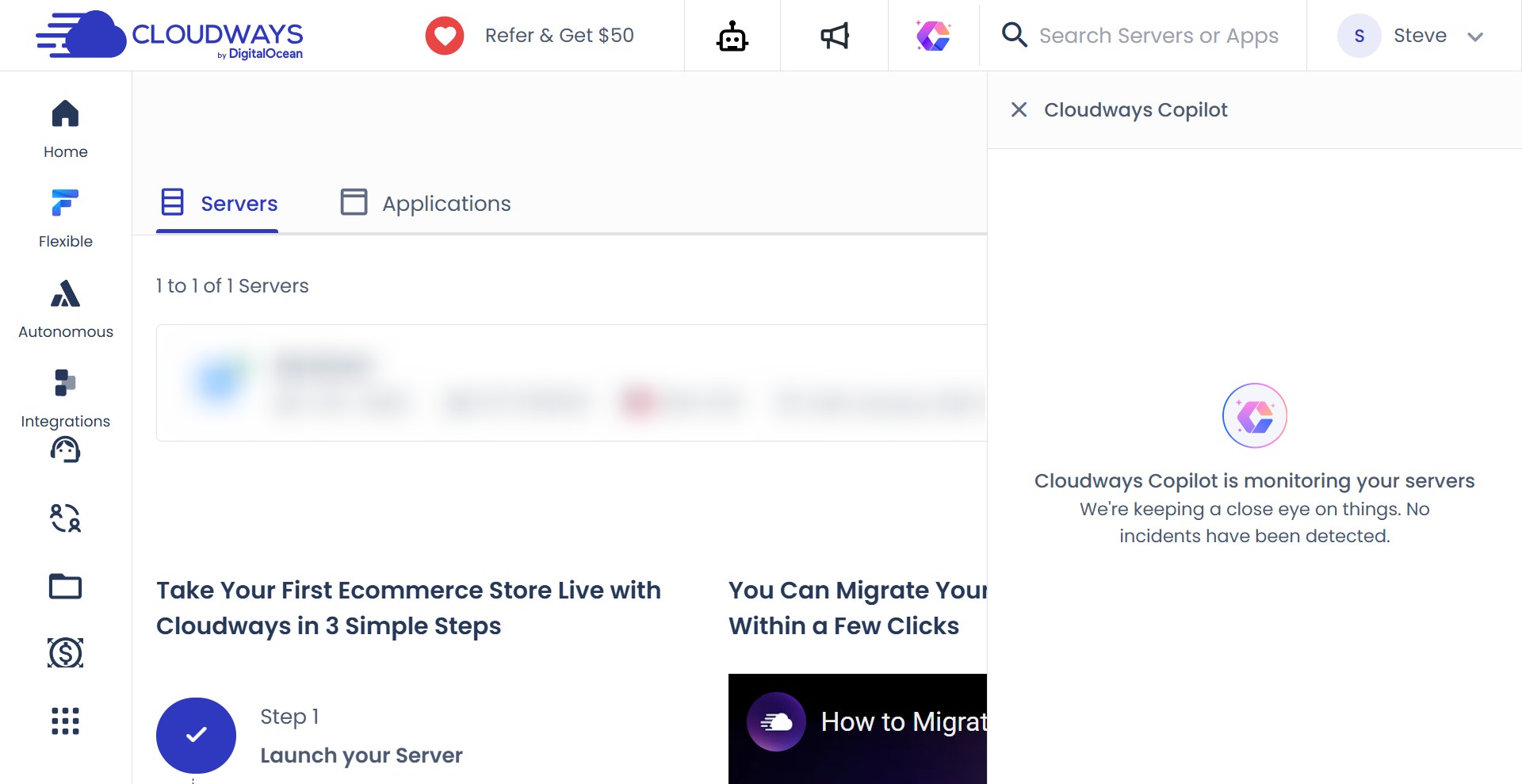
– Cloudways Copilot keeps a close eye on your servers at all times, so you are always the first to know when something goes wrong.
What made the experience stand out for Steve was how the tool communicated. It did not just act. It explained every step. It showed the code. It asked for permission before doing anything. “It’s not doing anything without your permission,” Steve says. “You’re in complete control.”
That level of transparency mattered, especially for someone without a technical background.
“I am a complete novice when it comes to coding, and I was able to solve a server issue in minutes.” — Steve Dellario
The same scenario played out again on another server shortly after. Copilot followed the same process: diagnose the problem, explain it clearly, show the relevant code, and ask before applying any fix. Steve felt completely comfortable both times. The tool had earned his confidence not through marketing, but through results.
Steve also draws an important distinction between Copilot and general-purpose AI tools. Unlike using an external AI assistant, Copilot is embedded directly in the Cloudways environment. That context is what makes the difference.
“It knows what’s happening on Cloudways, unlike an external tool that doesn’t understand your server environment.” — Steve Dellario
The most striking outcome from that Saturday morning was not the speed of the fix. It was the silence that followed. In the past, a server going down meant his phone would ring without stopping. Customers would be asking what was wrong. His team would be managing communication while the developers worked to find a solution. None of that happened this time. Copilot resolved the problem before a single customer even noticed something was wrong. “That is not normal,” Steve says, “and it was a godsend.”
“I didn’t get a single phone call from a customer about that Saturday morning outage.” — Steve Dellario
The time savings were dramatic. What previously took half a day for two or three developers was resolved in five minutes with no developer time required at all. In that single incident, Steve estimates the saving was a couple of thousand dollars in emergency development costs. Across multiple incidents, those savings compound quickly.
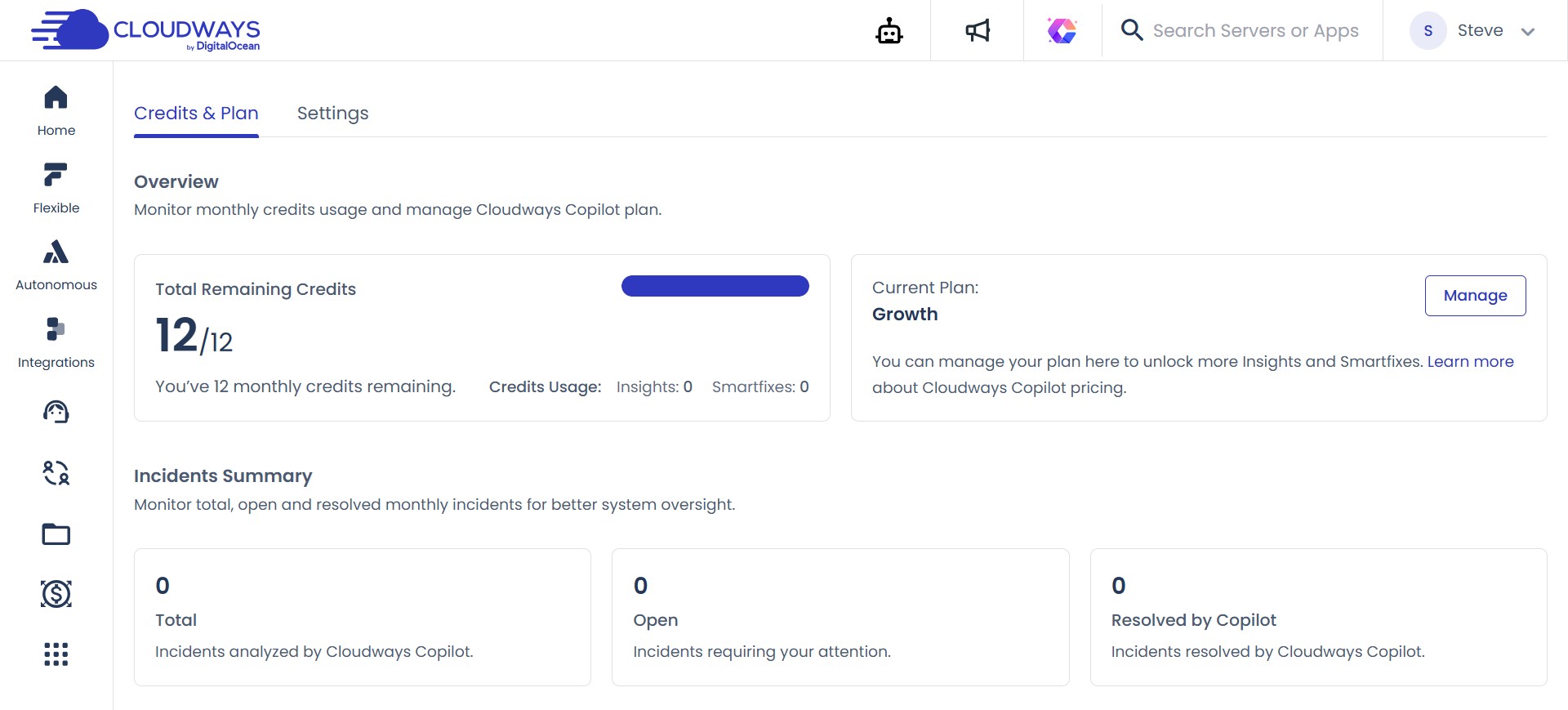
– With Cloudways Copilot, users can monitor monthly credits, track incidents, and manage their plan — without needing a developer.
Reduced downtime is only part of the story. The internal chaos that used to accompany every outage has also disappeared. There is no more scrambling, no more late-night pulls on a developer’s personal time, no more managing customer communications while simultaneously trying to find the source of a technical problem.
The platform has also benefited from a shift in mindset. Steve describes server management now as feeling like having another dev team member who simply handles these issues.
“When we do have these small maintenance stumbles, having this diagnostic tool that resolves them instantly is such a boon.” — Steve Dellario
The ease of use has been a meaningful part of the impact. Steve is the only non-programmer on his side who has actively used Copilot to resolve a live issue. His dev team still uses the backend when needed, but Copilot has taken maintenance issues largely off their plate. Steve says he would have full confidence that any non-technical team member could follow its recommendations without hesitation.
When asked what he would lose if Copilot were removed, Steve is direct. He would return to panic. Knowing that a simple issue, like a log file getting too big, could bring down the server on a weekend and require pulling a developer away from their personal time for half a day, would be genuinely painful to go back to.
“For any business owner who wants to protect their service uptime and avoid those panic moments, Copilot is incredibly handy.” — Steve Dellario
Steve recommends Copilot for two types of people. The first is any development team that would benefit from a tool already integrated into the server environment and aware of what is happening at the infrastructure level. The second, and the one he feels most strongly about, is the owner-operator, the business owner who needs uptime, who cannot afford customer complaints, and who wants to solve critical problems without always depending on a developer.

Cloudways Copilot diagnoses, alerts, and resolves critical server issues before your customers notice, without any developer involvement.
Try Cloudways CopilotShort but focused presentation of how businesses achieved their goals with our help

Meet Leighton Smith, a seasoned webmaster and web designer at...
Read Now
Brand On Fire, LLC is a web design and development...
Read Now
Mitchell Digital is a web design and SEO business based...
Read Now