Key Takeaways
- Choosing the right CMS depends on your goals, budget, and technical requirements.
- Ease of use matters, but scalability and performance play a bigger role in long-term success.
- Different CMS platforms serve different use cases, from blogging to ecommerce to headless setups.
- Comparing features, flexibility, and ecosystem support helps avoid costly platform changes later.
When I was creating my portfolio website a few years ago, I didn’t have much knowledge of CMS platforms. But I knew I did not want to deal with code, learn complex systems, suffer from limited customizability, or invest hundreds of dollars.
In my experience of building a basic website to display work and offer services, WordPress and Wix worked the best. But your requirements may be different.
Depending on your business, you may need to prioritize other factors like security, performance optimization, scalability, customization, and technical support.
Over the past year, CMS platforms have continued to evolve. In 2026, ease of use is still important, but it is no longer the only deciding factor. Performance, scalability, and built-in automation now play a bigger role in how businesses choose a CMS.
In this blog, I have covered the best CMS platforms, along with their pros and cons and one unique feature that might be just what your business needs. You will also find a comparison table below.
Overview of CMS Platforms
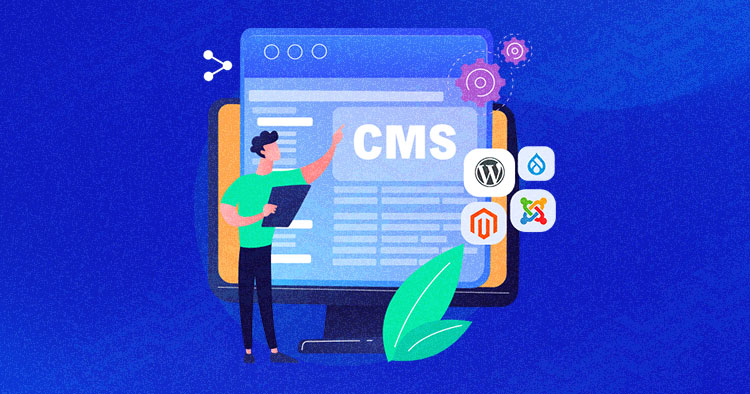
A Content Management System, or CMS platform, is software through which you can build, grow, and manage your website. CMS makes creating and editing a website easy and allows you to organize all the content on your site.
More often than not, with a CMS, you don’t have to have a lot of technical and coding knowledge.
Not only can you edit content but also design templates, store media files like images and videos, manage your team and assign them tasks, and add new features by using plugins. That’s a lot!
Market Share of CMS Platforms
Despite hundreds of content management systems available, WordPress, Shopify, and Wix still control a large chunk of the market. As of February 2, 2026, they make up about 73% of the CMS market share.
In the table below, you can see the top content management systems powering websites today, along with their market share.

– Source: W3Techs
Historical Growth Trends
Things continue to shift in the CMS landscape. WordPress still leads by a wide margin, but its growth has slowed compared to earlier years. Other platforms have gained attention by focusing on specific use cases rather than trying to do everything.
Shopify has continued to grow as more businesses move online and focus on ecommerce. Wix and Squarespace remain popular among individuals and small businesses that want quick setup and minimal technical work. These platforms appeal to users who value convenience over deep customization.
At the same time, some older platforms now serve narrower audiences. Joomla and Drupal still power complex and high-traffic websites, but fewer new users choose them today. Their strength lies in flexibility and control rather than ease of use.
Difference Between CMS and Website Builder
A CMS and a website builder often overlap, which can make the difference confusing. In 2026, many platforms blur the line by offering content management, hosting, and design tools in one place. The main difference comes down to control, flexibility, and long-term scalability.
| Feature | CMS Platform | Website Builder |
|---|---|---|
| Hosting | Typically self-hosted or can choose your hosting provider. | Hosting is provided by the website builder platform itself. |
| Ease of Use | Can range from beginner-friendly to advanced. | Very easy to use with drag-and-drop functionality, beginner-friendly. |
| Scalability | Highly scalable, suitable for both small and large websites. | Limited scalability for complex or high-traffic sites |
| Content Management | Advanced content management with flexibility for blogs, ecommerce, and more. | Simplified content management, often focused on small websites. |
| Plugins and Extensions | Offers a wide range of plugins/extensions for extra functionality (e.g., WordPress). | Mostly built-in features with limited extension. |
| Customization Flexibility | Highly customizable, with access to code for advanced customization. | Limited to pre-built templates and features; minimal coding required. |
List of the Best CMS Platforms in 2026
The CMS platforms listed below are based on market presence, user feedback, and how widely they are used today.
Each platform serves a different purpose, from simple websites to large-scale ecommerce and content-heavy projects. The right choice depends on your goals, technical comfort, and how much control you need.
Note: G2 ratings are approximate and based on publicly available reviews. Some open-source platforms do not have official G2 ratings.
| CMS Platforms | Initial release | Written in | G2 Ratings | Starting Price |
|---|---|---|---|---|
| WordPress | 2003 | PHP | 4.4 | Free (hosting costs apply) |
| Shopify | 2006 | Liquid, JS, CSS | 4.4 | Paid Plans |
| Wix | 2006 | Velo | 4.3 | Paid plans (from ~$14/mo) |
| Squarespace | 2003 | Ruby, PHP, Java | 4.4 | Paid plans (from ~$18/mo) |
| Joomla | 2005 | PHP | 5.0 | Free |
| Drupal | 2007 | PHP | 3.8 | Free |
| Magento | 2008 | PHP | 4.0 | Free (enterprise costs vary) |
| Webflow | 2012 | HTML, CSS, JavaScript | 4.4 | Free and paid plans |
| PrestaShop | 2007 | PHP | 4.3 | Free |
| OpenCart | 2005 | PHP | 4.3 | Free |
| Square Online (Weebly) | 2009 | PHP | 4.2 | Free & paid plans |
| TYPO3 | 2004 | PHP | 3.9 | Free |
| HubSpot CMS | 2006 | HUML, CSS, HTML | 4.5 | Free and paid plans |
| BigCommerce | 2009 | Ruby, PHP, Java, Python | 4.2 | Paid plans |
| Shopware | 2000 | PHP | 4.1 | Paid plans |
| October CMS | 2014 | PHP | 4.5 | Free or paid license |
| Sanity | 2015 | JavaScript | 4.7 | Free and paid plans (cloud pricing) |
| Strapi | 2016 | JavaScript | 4.6 | Free open source; paid cloud options |
| Storyblok | 2017 | JavaScript | 4.4 | Free starter + paid plans |
Picked Your CMS? Now Give It a Hosting That Keeps Up.
Whether you’re on WordPress, Magento, or any other platform, Cloudways gives you fast, managed hosting with a free migration handled by experts. No downtime, no stress.
1. WordPress
– Source: WordPress.org
Well, we all know this one. WordPress.org is our top recommendation for the best CMS platform.
Users often look for reliable WordPress hosting that helps them set up a site with solid performance. As of early 2026, WordPress powers about 60% of all websites that use a CMS, which keeps it firmly in the lead.
What Sets It Apart: Largest plugin ecosystem, with thousands of free and paid themes and plugins (including the best WordPress LMS plugins) that extend functionality without building everything from scratch.
Best For: Bloggers, content creators, ecommerce stores, digital agencies, and businesses.
Pros and Cons
✓ Supportive community
✓ High extensibility through plugins
✓ Strong SEO capabilities
✓ Flexible and customizable
✓ Easy to use for beginners, with room to scale for advanced needs
✗ Requires a domain name and hosting
✗ Website owners handle security and backups
2. Shopify
– Source: Shopify
Shopify is one of the best CMS platforms and many people’s choice globally to sell online. You don’t have to worry about technical things like hosting or updates.
Plus, Shopify has an enormous library of apps and themes, which makes it easier to customize your online store and manage complex product listings.
What Sets It Apart: Integrated payment solutions and a smooth setup process.
Best For: Entrepreneurs and small businesses looking to launch and manage online stores with minimal technical knowledge.
Pros and Cons
✓ Easy to use, even for beginners
✓ Fully managed platform with hosting, security, and updates included
✓ Large app and theme ecosystem
✓ Reliable performance and scalability for growing stores
✓ 24/7 customer support through live chat
✗ Monthly subscription costs
✗ Transaction fees on some plans
✗ Limited control over store code compared to open-source platforms
✗ Customization often depends on paid apps
3. Wix
– Source: Wix
Wix is a user-friendly, cloud-based platform that offers a free plan. Its customizable drag-and-drop builder makes it easy to create pages that suit your taste. Plus, Wix builds mobile-optimized sites.
What Sets It Apart: It offers AI-assisted design tools to help users get started quickly.
Best For: Individuals, freelancers, and small businesses.
Pros and Cons
✓ Automatically optimizes mobile layouts
✓ Handles hosting, security updates, and maintenance
✓ Large collection of pre-made templates
✓ Easy to set up without technical knowledge
✗ Cannot change templates once selected
✗ Limited flexibility for advanced customization
✗ Difficult to export or migrate data to another platform
4. Squarespace
– Source: Squarespace
Squarespace started around the same time as WordPress. It includes everything you need to build a website.
Squarespace is also a good option for small online stores. It has really nice templates and lets you sell physical or digital products. You can even use other tools to help with shipping, marketing, and customer service.
What Sets It Apart: It is focused on design and aesthetics.
Best For: Creatives like designers, artists, and photographers looking to showcase portfolios or small ecommerce stores.
Pros and Cons
✓ Easy to use with a clean interface
✓ High-quality templates focused on design
✓ Built-in tools for blogging and basic ecommerce
✓ Reliable hosting and maintenance included
✗ Limited customization compared to open-source platforms
✗ Ecommerce features require higher-tier plans
✗ No phone support on most plans
5. Joomla
– Source: Joomla
Joomla is an open-source CMS with a lot of flexibility. For those who require custom-type posts, it comes with lots of different templates and extensions. Installing Joomla is not beginner-friendly, but is ideal for developers and experienced website creators.
It’s often used for creating complex websites, such as corporate websites, online communities, and even ecommerce stores.
What Sets It Apart: Highly customizable, with control over content management structures.
Best For: Developers and larger websites that need more dynamic content structures but do not want to go full enterprise.
Pros and Cons
✓ Large extension ecosystem
✓ Flexible content and user management
✓ Suitable for complex site structures
✓ Active open-source community
✗ Steeper learning curve for beginners
✗ Extension compatibility issues can occur
✗ Requires ongoing maintenance
6. Drupal
– Source: Drupal
Drupal is another open-source CMS software that lets you build a highly customized website that processes a lot of data.
Drupal-based sites have high levels of security and are difficult to compromise. It offers free installation and tools that help with site migration. It updates regularly.
What Sets It Apart: Advanced security features and extreme flexibility with custom content types.
Best For: Large corporations, government websites, and institutions with complex, scalable content management needs.
Pros and Cons
✓ Strong security and access control
✓ Handles large and complex websites well
✓ Highly flexible content modeling
✓ Large ecosystem of modules
✗ Steep learning curve
✗ Development and maintenance costs can be high
✗ Theming and customization require technical expertise
7. Magento
– Source: Adobe
Magento (now Adobe Commerce) is a powerful open-source CMS platform from Adobe, the world’s largest software firm. A free version of Magento is available for users to download. It includes robust features to help you begin, run, and develop your business professionally.
What Sets It Apart: Extremely scalable and customizable for large-scale ecommerce businesses.
Best For: Large ecommerce businesses and enterprises with technical resources.
Pros and Cons
✓ Highly customizable for complex ecommerce needs
✓ Scales well for large product catalogs
✓ Strong inventory and order management features
✓ Open-source flexibility
✗ Requires significant technical expertise
✗ Hosting and development costs can be high
✗ Not suitable for small or simple stores
Build a Scalable Store With Cloudways’ Managed Magento Hosting
Optimize your Magento site effortlessly with our fully optimized stack, automated server & app management, and seamless traffic handling.
8. Webflow
– Source: Webflow
Webflow is unique because it combines a visual website builder with a content management system. See the difference between the two here.
It’s made with designers and developers in mind, offering high level of control and customization over your website’s looks and functionality.
What Sets It Apart: A visual design editor that offers more layout control than most website builders.
Best For: Designers and developers who want more control over website design without relying heavily on plugins.
Pros and Cons
✓ High level of design control
✓ Built-in hosting and maintenance
✓ Clean, production-ready code output
✓ CMS support for dynamic content
✗ Steeper learning curve than basic website builders
✗ Limited plugin ecosystem compared to WordPress
✗ Pricing can increase as sites scale
9. PrestaShop
– Source: PrestaShop
PrestaShop is another popular CMS platform with a wide range of features and a helpful community. It is well suited for selling products online and works best for users with some technical experience.
What Sets It Apart: Open-source with large international community and flexibility in pricing options.
Best For: Small to medium-sized online stores.
Pros and Cons
✓ Open-source and budget-friendly to get started
✓ Supports multiple currencies and languages
✓ Wide range of payment and shipping modules
✓ Active international community
✗ Requires technical setup and maintenance
✗ Many extensions are paid
✗ Limited scalability for very large ecommerce stores
10. OpenCart
– Source: OpenCart
OpenCart is also an open-source ecommerce platform, and unlike PrestaShop, it is designed for businesses of all sizes. It offers a plethora of features and customization options and allows you to configure shipping rates, methods, and carrier integrations.
What Sets It Apart: Lightweight and highly extensible.
Best For: Small businesses and startups looking for a free ecommerce solution.
Pros and Cons
✓ Lightweight and fast to set up
✓ Easy-to-use admin dashboard
✓ Open-source with no platform fees
✓ Good selection of extensions for core ecommerce needs
✗ Many extensions require additional cost
✗ Limited scalability for growing stores
✗ Smaller community compared to major platforms
11. Square Online (formerly Weebly)
– Source: Weebly
You’ve probably heard of Square Online (formerly Weebly). It is yet another cloud-based website builder that does not need you to know coding.
Square Online offers different plans for different needs. There’s a free one and then paid plans with more features like unlimited storage and a domain name.
If you have a small business, there’s a plan for you, too, that includes extra tools like password protection and tax calculators.
What Sets It Apart: Websites created on Weebly are automatically optimized for mobile devices.
Best For: Beginners, personal websites, and small businesses with basic needs.
Pros and Cons
✓ Very easy to use for beginners
✓ Hosting and maintenance included
✓ Quick setup for simple websites
✓ Built-in ecommerce for basic stores
✗ Limited design and customization options
✗ Not suitable for large or complex websites
✗ Fewer updates and features compared to competitors
12. TYPO3
– Source: TYPO3
TYPO3 has open-source scripts that advanced programmers use to find various functionalities. It can handle websites in several languages as it grants users a wide range of permissions. You can assign users to editor groups.
What Sets It Apart: Strong support for enterprise-level content management and scalability.
Best For: Corporations and large websites needing multilingual and multisite capabilities.
Pros and Cons
✓ Highly scalable and suitable for large websites
✓ Strong built-in multilingual support
✓ Flexible content and user management
✓ Long-term support versions available
✗ Steep learning curve
✗ Requires experienced developers to manage
✗ Smaller ecosystem compared to more popular CMS platforms
13. HubSpot CMS
– Source: HubSpot CMS
HubSpot CMS is an awesome choice for all businesses searching for an all-in-one website management system. It’s part of HubSpot’s larger suite of marketing, sales, and customer service tools.
What Sets It Apart: Native integration with HubSpot’s CRM and marketing tools, making it powerful for inbound marketing.
Best For: Businesses that rely on inbound marketing and CRM tools.
Pros and Cons
✓ Built-in CRM and marketing tools
✓ Secure, fully managed hosting
✓ Good performance and reliability
✓ Easy content editing for non-technical users
✗ Higher cost compared to basic CMS platforms
✗ Limited flexibility outside the HubSpot ecosystem
✗ Advanced customization requires paid plans
14. BigCommerce
– Source: BigCommerce
You must have heard of this one. BigCommerce is great for building an online store because it handles everything. So, like Shopify, you don’t have to worry about any of the technical stuff.
Plus, BigCommerce offers a free domain name, but you can also use your own custom one. The CMS has a trial plan, which means you can test it out before making the final decision.
What Sets it Apart: Built-in ecommerce tools with multichannel selling capabilities (eBay, Amazon, etc.).
Best For: Medium to large ecommerce businesses looking to scale.
Pros and Cons
✓ Strong built-in ecommerce features
✓ Scales well for growing businesses
✓ No transaction fees on most plans
✓ Good performance and security
✗ Higher starting cost than basic ecommerce platforms
✗ Limited theme customization compared to some competitors
✗ Smaller app ecosystem than Shopify
15. Shopware
– Source: Shopware
Shopware is known for its flexibility, scalability, and extensive features. It is an open-source ecommerce platform.
While it primarily focuses on ecommerce, it also has some CMS functionalities for managing website content.
What Sets it Apart: Flexibility and scalability with a focus on customer experience.
Best For: Medium to large ecommerce businesses with development resources.
Pros and Cons
✓ Flexible and scalable ecommerce platform
✓ Strong API and headless support
✓ Suitable for complex ecommerce use cases
✓ Active development and community support
✗ Requires technical expertise to set up and maintain
✗ Higher costs for enterprise features
✗ Smaller ecosystem compared to larger platforms
16. October CMS
– Source: October CMS
October CMS is an open-source content management system (CMS) designed specifically to build modern websites and applications. It is known for its clean UI, powerful features, as well as strong community support.
What Sets it Apart: Powerful CMS built on the Laravel framework.
Best For: Developers and agencies building custom websites.
Pros and Cons
✓ Clean and simple backend interface
✓ Built on Laravel with strong developer control
✓ Flexible for custom projects
✓ Lightweight compared to larger CMS platforms
✗ Requires development knowledge
✗ Smaller plugin ecosystem
✗ Not suitable for non-technical users
17. Sanity
– Source: Sanity
Sanity is a headless CMS built for teams that need flexible and structured content. Instead of focusing on page layouts, it lets you define how content is organized and reused across websites and applications. This makes it a strong choice for modern, content-driven projects.
Sanity works especially well when content needs to appear in more than one place, such as websites, mobile apps, or dashboards. It requires development setup, but offers more control than traditional CMS platforms.
What Sets it Apart: Real-time collaboration that lets multiple users edit content at the same time.
Best For: Product teams, developers, and businesses building custom websites or applications.
Pros and Cons
✓ Flexible content modeling
✓ Real-time collaboration
✓ Works well with modern frameworks
✓ Scales well for content-heavy projects
✗ Requires development knowledge
✗ Not suitable for simple websites
✗ Setup and configuration take time
18. Strapi
– Source: Strapi
Strapi is an open-source headless CMS that lets developers manage content through APIs. It provides a clean admin interface while giving full control over how content is structured and delivered. This makes it a solid option for custom and API-driven projects.
Strapi can be self-hosted or used through its cloud offering. It works well when you need flexibility, control over data, and the ability to connect content to multiple frontends.
What Sets it Apart: An open-source core that allows full control over hosting and customization.
Best For: Developers and teams building custom websites, applications, or API-first products.
Pros and Cons
✓ Open-source and self-hostable
✓ Full control over content structure and APIs
✓ Flexible content modeling
✓ Active developer community
✗ Requires technical setup and maintenance
✗ Limited built-in features for non-technical users
✗ Some advanced features require paid plans
19. Storyblok
– Source: Storyblok
Storyblok is a headless CMS that combines a visual editor with API-first content delivery. It lets content creators preview changes as they work while giving developers structured content they can reuse across websites and apps. This makes it a practical choice when you want both developer flexibility and content editor usability.
You can start with a free tier and scale into paid plans as your needs grow. Storyblok works well when you need content across multiple channels and want a visual editing experience.
What Sets it Apart: A visual content editor that shows changes in context, even though the CMS delivers content via APIs.
Best For: Teams that want both developer flexibility and a visual editing interface.
Pros and Cons
✓ Visual editor that helps non-technical users
✓ Headless architecture for modern web builds
✓ Flexible content blocks and reusable components
✓ Works well with frameworks like Next.js and Nuxt
✗ Requires development setup for full use
✗ Pricing rises as teams grow
✗ Not ideal for simple, single-page sites
How to Choose a CMS Platform in 2026
Just because a CMS platform is popular does not mean it is right for your needs. Choosing a CMS is an important decision for your business because it forms the foundation of your website and online presence.
For Small Businesses
This can be tricky because small businesses vary widely in size and goals. Most small businesses need a CMS that is affordable, easy to use, and flexible enough to grow over time.
WordPress is a strong option because it balances ease of use with customization. Wix, Squarespace, and Square Online also work well for small businesses that want a faster setup with minimal technical effort.
For Ecommerce Stores
If you are selling online, it makes sense to choose a CMS with built-in ecommerce features. Look for product management, payment processing, and shipping integrations that match your business needs.
Shopify is a popular choice for ecommerce stores and continues to grow. Magento and BigCommerce are also good options for larger or more complex online stores.
For Digital Agencies
Digital agencies often need to build different types of websites for different clients. This includes portfolios, service websites, and content-heavy projects. Customizability, flexibility, and scalability are important factors.
WordPress and Drupal are popular choices due to their flexibility and plugin ecosystems. Joomla, October CMS, and Webflow are also used by agencies depending on project needs. The final choice depends on your team’s technical expertise, budget, and customization requirements.
For Bloggers
Bloggers need a CMS that is easy to use and optimized for content creation. Plugins for SEO, marketing, security, and maintenance also play an important role.
WordPress remains the most popular choice for bloggers. Large blogs like TED, TechCrunch, and Windows Blogs use WordPress, which makes it a reliable option, especially for beginners.
Questions to Ask Before Picking a CMS
- How easy is the CMS to learn and use?
- Does it support the features you need, such as ecommerce, blogging, or memberships?
- What is the total cost, including hosting and additional fees?
- Can it scale as your website grows?
- Is there an active community and long-term support?
Fastest Managed WordPress Hosting For Developers at Just $11/Month
Experience blazing fast server speeds with Cloudways LAMP + NGINX hybrid stack. Improve your Core Web Vitals today.
Summary
Choosing a CMS is a critical decision and should not be based on popularity alone. The right platform depends on your goals, budget, and technical requirements.
This guide covers the best CMS platforms, what they are best used for, and what sets them apart. Take time to evaluate factors like customization, scalability, cost, and community support before making your final decision.
Q. Which is the best CMS platform?
The best CMS platform depends on your specific needs and preferences. Popular options include WordPress, Wix, Squarespace, Shopify, and Drupal.
Q. What is the most common CMS?
WordPress is the most widely used CMS platform.
Q. What Is a Headless CMS?
A headless CMS separates the content management system from the front end. This allows content to be delivered across websites, apps, and other platforms. Examples include Sanity, Strapi, Storyblok, and headless setups using WordPress.
Sarim Javaid
Sarim Javaid is a Sr. Content Marketing Manager at Cloudways, where his role involves shaping compelling narratives and strategic content. Skilled at crafting cohesive stories from a flurry of ideas, Sarim's writing is driven by curiosity and a deep fascination with Google's evolving algorithms. Beyond the professional sphere, he's a music and art admirer and an overly-excited person.